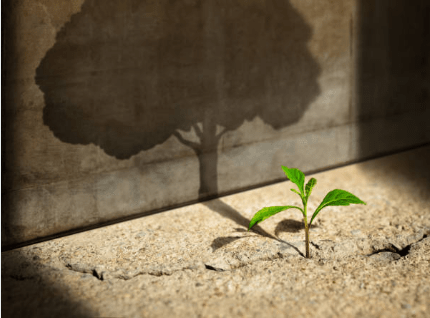
“Let us learn to appreciate there will be times when the trees will be bare, and look forward to the time when we may pick the fruit.” – Anton Chekhov, author
PAUSE 1
The Azalea Garden is less manicured than the Formal Gardens where you completed your last three strolls. Here, nature is permitted to more freely take its course, its abundance sometimes spilling onto the paths and benches. Think about the connections in your life in this context. For which connections has trust felt natural, inevitable, and bountiful? For which has the prospect of trust felt more difficult? Why? (McCaffrey, Ruth DNP, FAAN. “Strolls for Well-Being at Brookside Gardens.”, Brookside Gardens, 2006, p. 68).
Journal Entry 1
Trust has always been a point of caution for me. I’ve found that in the past, I cater my trust level depending on who I am around. When you have been hurt or let down trust can be a hard thing to give. I think trust can vary on the level of comfort you have with someone.
Update to Pause 1
Honestly, the connections that have felt natural, inevitable, and bountiful have been my friendships and work associates. I feel that this is the case because in those spaces, I can be myself without the need to have my guard up. Which is weird when it comes to my career because most people say they wear a mask at work, but honestly, work (outside of my friendship) is the one place I didn’t have to wear a mask. I wore a mask to protect myself in my family, and I did the same in my 20+ year relationship. I didn’t trust that I could be myself because I would be viewed as weak and vulnerable. No wonder why I found comfort in my career and excelled. At work, I figured out how to obtain what I wanted without losing myself. If something felt uncomfortable or if I needed more, I looked for opportunities. If nothing was available, I left no questions asked, no hard feelings. However, I never took the time to evaluate my personal life in that way. I normalized dysfunction in my personal life because it was familiar. I didn’t tolerate it at work because I understood that I do not thrive in dysfunction. I need structure and clarity. My work provided me with that, and when it didn’t, I removed myself.
What’s wild is that all the lessons that I’ve learned throughout my career, I am now applying to my personal life. I’m paying more attention to what spaces, places, and people make me feel uncomfortable and why. Once I understand and analyze my feelings, I plan accordingly and move forward. Trust is something that I’ve naturally given to people. At work, when someone shows me who they really are (because, in my opinion, it’s kind of hard to hide your true self at work if people are paying attention), I would believe what I saw 100% and move accordingly. I either adjusted the way I interacted with that person or, if needed, removed myself from the situation altogether. However, in my personal life, people would constantly show me who they were but instead of believing it or adjusting myself, I would tolerate it because I had normalized the behavior. I guess in the end, I didn’t realize until recently how much control over my personal life I had. Now in my career, I learned that early and reaped the benefits. But I never slowed down enough to ask myself what kind of life I wanted to live. How I wanted to feel, what energy I wanted around me, until now. Now I still trust openly and freely; however, I now use my discernment to assist with how I should move forward.
PAUSE 2
Azaleas thrive in shady spaces with filtered sunlight. Over time, most of the original pine trees here have died and been returned to the earth, leaving holes in the canopy until new trees were planted and grew upward to provide shade again. Loss and new growth are inherent to all forms of life. Reflect on how the growth of trust over the course of your lifetime has protected and fortified you, as well as how you have healed – or will heal – from your losses when trust died. (McCaffrey, Ruth, DNP, FAAN. “Strolls for Well-Being at Brookside Gardens.”, Brookside Gardens, 2006, p. 68).
Journal Entry 2
Trust has protected me from needing to be everything to everyone. Before I started this course I never thought trust could be broken and rebuilt. However, I have learned that trust can be rebuilt if new patterns are formed and a sense of self is not lost in the process of rebuilding.
Update to Pause 2
Trust is earned through daily actions and/or your history of interactions. For me, when trust is broken, I’m more open to repair than to discard the relationship, depending on the situation. In my marriage trust was broken and I knew in my heart that I would not be able to recover from that level of mistrust. But I went against my instinct to leave, which in hindsight was a misguided choice. I understand why I made the choice, but nonetheless pretty misguided. I have now learned that the person I need to trust more is myself. If I know in my heart that I’m not going to be able to recover from a loss of trust being broken, I’m out the first time.
PAUSE 3
The paths in the garden bend and split, turning toward and away from one another. As in life, there is vulnerability in walking forward, in following each curve and choosing which direction to take. Contemplate the role trust plays when you don’t know what you’ll find around the bend. And consider, too, what it means that in the face of the uncertainty, the seasons still change, and the azaleas always bloom in spring. (McCaffrey, Ruth DNP, FAAN. “Strolls for Well-Being at Brookside Gardens.”, Brookside Gardens, 2006, p. 69).
Journal Entry 3
Trust and risk go hand and hand. You can’t have one without the other. Trust is something people do every day, even if they don’t realize it. From your hairdresser to the schools you send your child to. Trust is something that you ultimately have to relinquish in life until trust is broken, there’s nothing to contemplate. Trust can be intrusive and can be discomforting when boundaries are overstepped.
Update to Pause 3
Like the azaleas, which always bloom in spring, I have learned that as long as I stay true to myself, so will I.
For some, trust in the universe means believing that everything happens for a reason; though to others, the notion that our tragedy is part of the natural order of things does not resonate. Perhaps trusting the universe is really about acceptance – acceptance that the world is both devastating and gorgeous, both random and steady. Ask yourself what trusting the universe means, or could mean, for you, and whether it might bring solace from confusion or pain. (McCaffrey, Ruth DNP, FAAN. “Strolls for Well-Being at Brookside Gardens.”, Brookside Gardens, 2006, p. 69).
Journal Entry 4
I’ve always been a big believer that everything happens for a reason. Being adopted when I was a few months old kind of forced me into this belief early on. I didn’t have a choice to rationalize my situation.
PAUSE 4
Trusting the universe means that everything has a divine order and letting go of things you can not control.
Update to Pause 4
This one hits deep for me because I am a big proponent of everything happens for a reason. However, I now know that cycles will repeat in your life unless you address them. Everything does happen for a reason, and if you find yourself in the same situation or a similar one, it’s because you need to make a different choice. I believe letting go is the part that holds people back because we fear losing. We fear losing loved ones, relationships, jobs etc. When the truth is lost is inevitable; it’s a part of the life experience. Because the truth is, you don’t own anyone or anything; you are just experiencing them or it. You can’t lose anything that was meant to be yours. The only thing that you truly own is yourself, and that’s the only relationship you should focus on not losing.
PAUSE 5
Look back as always to the story of your life and identify times when you followed Ralph Waldo Emerson’s famous advice, Trust thyself. What happened when you did? Do you trust yourself at this point in your life? Why or why not? If our instincts have been wrong in the past, of if we are not yet fully the person we wish to be, we may be wary of trusting ourselves. Think about how you can build trust with yourself, and what trusting yourself would look like in practice. (McCaffrey, Ruth DNP, FAAN. “Strolls for Well-Being at Brookside Gardens.”, Brookside Gardens, 2006, p. 69).
Journal Entry 5
Oh I always know that with God I am able to do anything and Go is within me so I always trust myself and that I will get tohe other side but its the process that has be in doubt some times but the more I live and experience life the more I’m learning to except and trust the process of hurt and building tools to help me navigate through rough times.
As long as my intentions are in line, I fully trust myself and that the God in me and the universe will guide me in the right direction.
Update to Pause 5
The only thing I would add to this is that the God in me, my ancestors, and the universe will guide me in the right direction.
PAUSE 6
Self-trust is at the root of the adage Everything you need is already within you. Mindfulness, which you have practiced in previous strolls, can help you look inward for guidance. Bring your awareness first to the many shades of green and the other colors around you, to the way the light interacts with them in this weather, at this time of day. Then notice your physical body; the warmth or chill on your skin, the sensation of gravity holding you where you sit or stand. Finally, bring your awareness inward. These moments of being fully present with ourselves can be opportunities to ask the questions with which we are struggling. (McCaffrey, Ruth DNP, FAAN. “Strolls for Well-Being at Brookside Gardens.”, Brookside Gardens, 2006, p. 69).
Journal Entry 6
I’ve come too far in life to ever second-guess myself. The only time I have second-guessed myself is when I let other people’s ideas and thoughts enter my mind, and I’m making sure I keep that content and material at bay.
Update to Pause 6
No update




Leave a comment